A short summary for anyone wondering where Tarock comes from.
The name. The game was not called Tarock at first, but trionfi — "triumphs". The oldest reliable mentions of carte da trionfi come from court account books in northern Italy in the 1440s. The exact birthplace is unknown; Milan, Ferrara and Bologna are the likeliest centres.
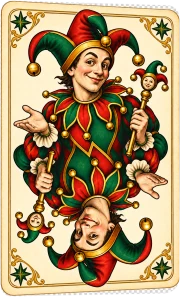
What was new. Trionfi was not a game invented from nothing. To the ordinary Italian four-suit pack — cups, coins, swords, batons — a fifth group of cards was added that beat all the others regardless of suit. That was the first permanent trump in the history of card games, and it is that idea which later spread into dozens of other games. The pack held 78 cards: 56 suit cards, 21 trionfi and the fool (il matto), which was not a trump but an exception of its own.
The change of name. Around 1505 the sources first show tarochi in Ferrara and taraux in Avignon. Why the name displaced trionfi is unknown — no explanation is established. The Italian tarocchi gave the French tarot and the German Tarock.
How we got to our 54 cards. Our pack is not the original one. Central European Tarock is a later, shortened form that removed part of the low suit cards; the shape we know today settled in the Austrian lands in the nineteenth century.
And the fortune-telling? It came last, not first. For three centuries Tarock was purely a trick-taking game; using these cards for divination appeared only in France towards the end of the eighteenth century.
A fuller timeline is on the history page.